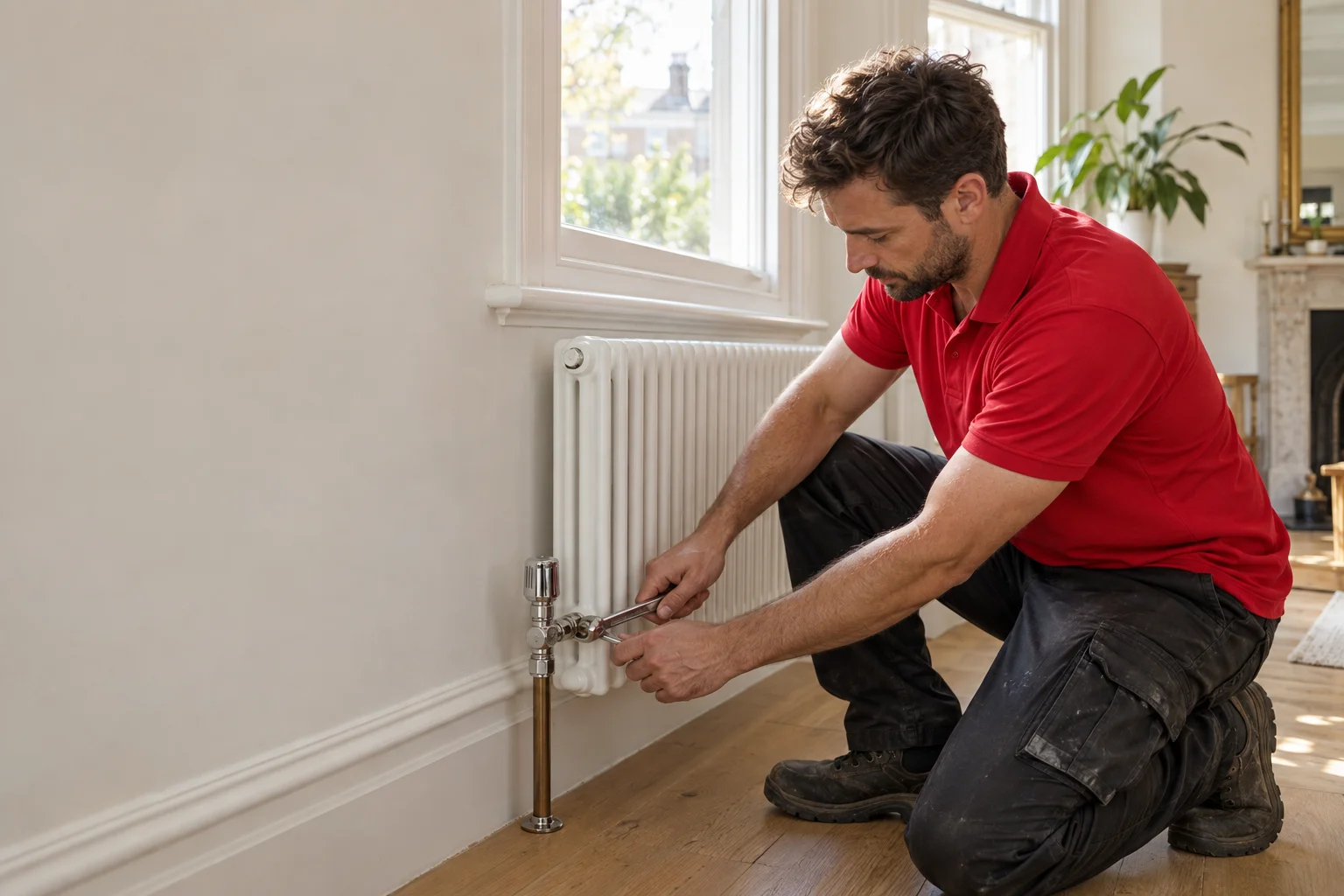
Heating-system assessment before cleaning
We investigate uneven heating, recurring circulation problems and evidence of deposits in the heating circuit. The assessment checks which radiators are affected and considers valves, controls and circulation alongside water condition. This establishes whether cleaning will address the problem or whether a separate repair is required first.
Where power flushing is suitable, we define the circuit to be cleaned, connection and isolation arrangements, compatible treatment and the checks to be made afterwards. System age, material and existing leaks influence the method. We explain a different repair or cleaning route where forcing a flush through vulnerable pipework would be inappropriate.
What a power flush is intended to do
The aim is to remove material circulating or accumulating within the heating water circuit using suitable equipment and products. The exact arrangement depends on the installation and the chosen method. The work should be planned by someone who can assess the system and follow the relevant equipment and product instructions.
This is a heating-circuit service, not a general treatment for weak tap pressure, drinking-water pipework or every hot-water fault. Explain the problem in ordinary terms rather than ordering a chemical treatment by name if the cause is unknown. We can then discuss whether the next step should be diagnosis or a defined cleaning job.
Check condition before choosing the method
Older radiators, suspect joints, existing leaks and inaccessible components need consideration before work begins. Cleaning cannot make a corroded component sound or repair a failed valve. The survey should identify known defects and explain whether any repair is needed first.
Ask which cleaning method is proposed and why it suits the installation. There may be reasons to focus on an individual component or use another approach. Do not assume that the most intensive sounding treatment must be best. The proposal should connect the method to the findings and acknowledge any uncertainty about concealed or deteriorated parts.
Access and disruption during the work
The engineer needs access to the relevant equipment, radiators and working connections. Tell us about fitted radiator covers, furniture, locked rooms and spaces that cannot be taken out of use. Where a communal heating circuit is involved, access and authorisation may need the building manager’s input.
Discuss interruption of heating, available water and disposal arrangements as part of the agreed method. Protecting the occupied property and having space to work are practical requirements. A duration cannot be promised from radiator count alone; the circuit arrangement, condition and findings during the work can affect the programme.
Cleaning alongside a boiler replacement
When a new boiler is proposed, the condition of the retained heating circuit should be part of the installation planning. The required preparation must suit the equipment manufacturer’s instructions and the actual system. A new heat source does not by itself remove material already present in old pipework and radiators.
Ask the installer to specify the preparation included rather than leaving the quotation with an undefined phrase such as system clean. Keep product and commissioning information with the installation records. If the work is being carried out by different contractors, agree responsibilities so cleaning, repair and commissioning are coordinated.
How to judge the outcome
We record the affected rooms and radiator symptoms before cleaning, then check operation under suitable heating conditions after the system has been restored. The handover identifies the cleaning performed, treatment used and any remaining repair or balancing recommendations. Those checks relate the outcome to the original complaint rather than relying only on the appearance of discharged water.
The proposal accounts for circuit size and layout, access to radiators and connection points, preparation, cleaning method and any identified repairs. Further work needs separate agreement if cleaning exposes a defect or leaves a circulation problem that requires another remedy. Cleaning addresses the condition found; room heat loss, radiator sizing and faulty controls remain separate considerations.
Request an assessment in London
Tell us the postcode, approximate number of radiators, heating type and the symptoms you want resolved. Mention any previous cleaning, leaks, boiler changes or reports, and the team can arrange a way to share useful records after the enquiry. Say if this is part of a larger refurbishment or boiler installation.
Loyal Plumbers has 10 active vans and a 24/7 service across London and inside the M25. We schedule planned cleaning after its scope and suitability are established, with access and interruption requirements agreed before attendance. Send the heating symptoms and installation details so we can identify whether you need a diagnosis visit or a defined system-cleaning job.
Common questions
Do cold radiators always need power flushing?
No. Controls, valves, air and other circulation problems can produce poor heating. A diagnosis should establish whether cleaning addresses the problem before you commit to it.
Can power flushing stop a leak?
No. A leaking radiator, valve or pipe needs its own assessment and repair. Tell the engineer about known leaks before any cleaning method is selected.
Can I use heating cleaner myself?
Do not add products or connect flushing equipment without understanding the system and manufacturer requirements. An unsuitable product or method can create additional problems; arrange a competent assessment.
Will all radiators heat identically afterwards?
Performance depends on radiator capacity, controls, flow distribution and the room as well as cleanliness. The completion checks should address the symptoms and identify any separate work still needed.
Sources and further reading
Useful guides for this service
Explore all radiators and heating guides →Need help with this in London?
Emergency repairs, investigations and planned installations across London and inside the M25. Tell us what you need so we can agree the next step.
Discuss your job