Emergency plumbing repairs we handle
Our emergency service covers the plumbing fault and the work needed to control it. A damaged cold-water pipe, a leaking heating connection and a toilet backing up require different isolation and repair methods. We establish which system is involved before disturbing fittings or opening access.
- Burst and leaking pipes: locate the damaged section, establish isolation and repair or replace the affected pipework.
- Overflowing toilets and blocked drains: assess whether the restriction is local or farther along the drainage route, then arrange the appropriate clearance.
- Leaking cylinders and tanks: identify vessel leaks, connection faults or safety discharge and route the work to the relevant cylinder service.
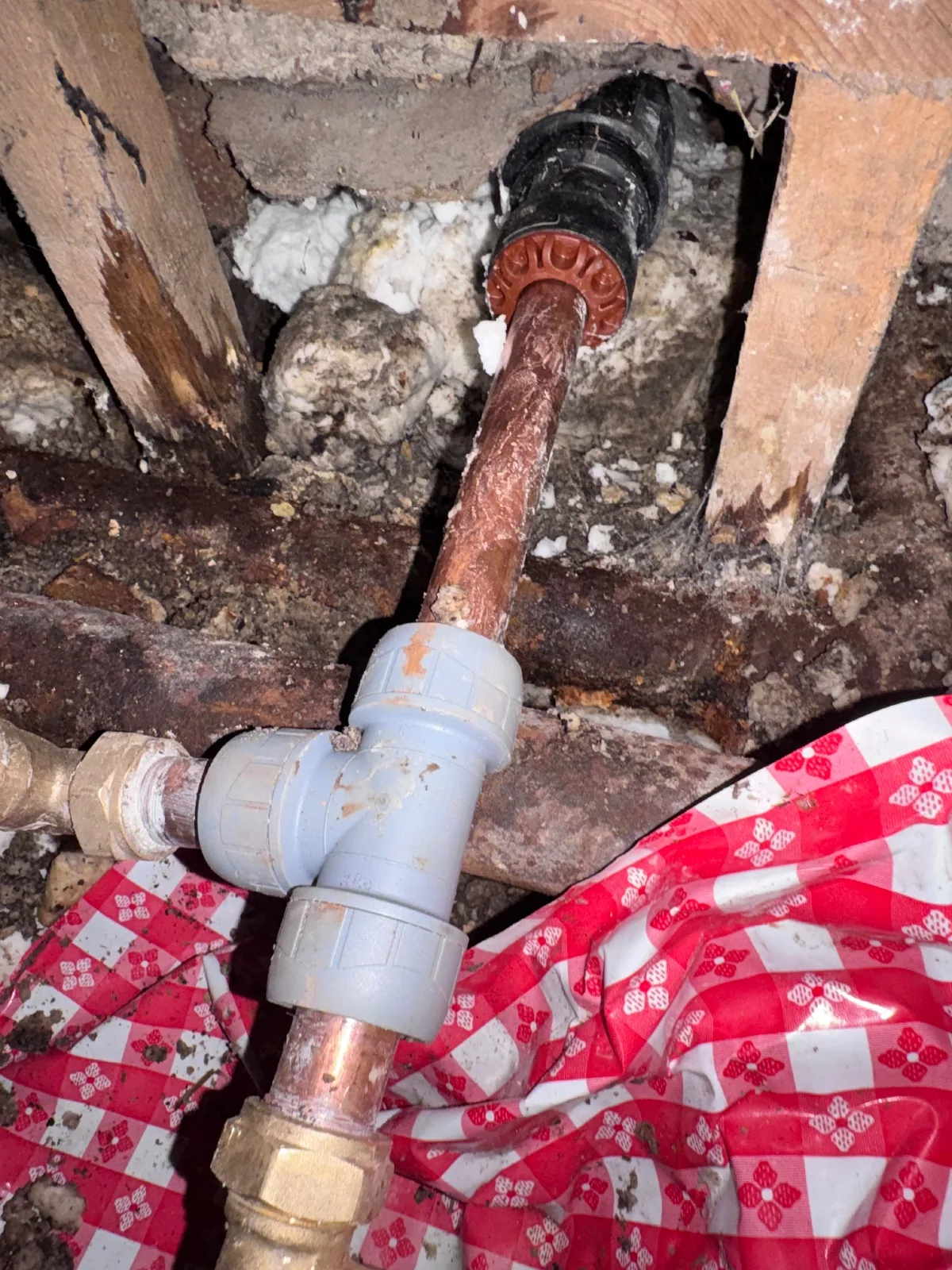
- Failed stopcocks and isolation valves: establish an upstream way to control the supply before repairing the faulty valve.
- Radiator and heating leaks: control the affected circuit, repair the valve or connection and check the restored system.
- Sudden loss of heating or hot water: identify the boiler, cylinder or local-outlet fault and arrange the appropriate diagnostic visit.
What happens when you request help
The first details we need are your address, the current flow and whether anyone is at risk. Tell us if the water is reaching lights or sockets, coming through a ceiling, affecting another flat or leaving the property without its only usable toilet. Those details help us prepare for the right system and access.
We confirm current attendance arrangements for your location. The visit begins with assessment and containment, followed by the repair options and charging basis. When the fault is accessible and suitable parts are available, the repair can follow that assessment. Where further access or parts are needed, we explain the next stage and any temporary measure.
While you are waiting: reduce the immediate risk
Keep occupants away from spreading water and unstable ceilings. If your familiar inside stop valve is safely accessible and turns normally, close it without force. This can limit a mains-fed escape, but stored water and closed heating circuits can continue releasing water after the incoming supply is off.
Do not touch wet switches, a wet consumer unit or water-damaged electrical equipment. Electrical isolation must only be attempted where it is safe. Keep clear of a sagging ceiling and stop using a toilet, shower or appliance that is visibly feeding the escape. Avoid repeated flushing, blind tightening and removing technical covers.
For a gas smell, suspected gas escape, carbon monoxide alarm or suspected carbon monoxide, leave the property and call the National Gas Emergency Service on 0800 111 999 from a safe place outside. Seek urgent medical help for suspected exposure; call 999 for severe symptoms. Avoid flames and electrical switches. Do not wait for a plumbing enquiry response.
Containment, repair and testing on site
We identify the source and available isolation before agreeing the work. An exposed split pipe may need a replacement section; a leaking tap or WC may need its failed component renewed; a blocked drainage branch may need clearance and further investigation if the obstruction recurs. The method follows the finding.
After repair, we check the affected installation under suitable operating conditions and explain any remaining restriction or follow-up. Temporary isolation can protect the property while leaving some outlets unavailable. We make that distinction clear so occupants know what can be used and what still needs permanent work.
Water leaks between flats and in managed buildings
For a flat, tell us where water appears and whether the space above can be accessed. The source may be another dwelling or communal pipework. We coordinate the investigation around available entry and the person authorised to approve work; a ceiling stain alone cannot establish responsibility.
Managing agents and landlords can provide keyholder details, riser access and approval arrangements with the enquiry. If part of a shared supply needs isolating, the effect on other occupants must be addressed. Tell us about vulnerable residents and essential facilities so the response accounts for how the building is being used.
Emergency plumbing for commercial premises
We handle urgent leaks, washroom failures, drainage problems and interruptions to hot or cold water at commercial properties. Describe the affected facilities and operational impact: a leaking kitchenette feed needs a different access plan from a shared washroom supply serving several floors.
Provide the site contact, security arrangements and access to the relevant plant or service cupboards. We can then agree the immediate plumbing work and any planned follow-up around the premises. Reopening an area also depends on sanitation, electrical and building safety where those have been affected.
Repair costs, access and damage afterwards
The charging basis and repair scope are discussed before work proceeds. Diagnosis, isolation, parts and concealed access can all affect the job. If a floor, panel or wall must be opened, we identify the proposed access and agree what making good is included.
Stopping the leak is separate from drying and restoring water-damaged finishes. We can help establish that next scope once the source is controlled. Keep safe photographs and repair records, and check any claim requirements with your insurer; cover for investigation, source repair and damage can differ.
What counts as a plumbing emergency?
Treat it as an emergency when water is escaping and you cannot stop it, when water is near electrics, when wastewater is coming back into the property, or when a vulnerable person has no heating or hot water in cold weather. In those situations, waiting for the next working day usually makes the damage or the risk worse.
- A burst or split pipe, or water coming through a ceiling
- A leak you cannot isolate because the stopcock is stuck or cannot be found
- Sewage or wastewater coming back up through a toilet, shower or floor drain
- The only toilet in the home blocked or overflowing
- No heating or hot water with elderly occupants, young children or someone unwell at home
- A leaking hot water cylinder, or water discharging from its safety pipework
When it can wait for a booked visit
A dripping tap, a slow basin, a toilet that keeps running or a radiator that will not warm up are worth fixing soon, but they can usually be booked for a normal appointment. If you are unsure, call and describe what is happening, and we can tell you whether it needs someone now.
A blocked drain becomes an emergency when wastewater is backing up indoors, an outside gully is overflowing near the house or the property has no working toilet. If neighbours are affected too, the blockage may be in a shared drain or public sewer, which is the sewerage company's responsibility. If sewage is entering the home, our guide to the first response covers what to do while help is on the way.
Turning the water off while you wait
If water is escaping and you can reach it safely, close the internal stopcock by turning it clockwise. It is usually under the kitchen sink, near the front door or where the supply pipe enters the building. In a flat it may be in a utility cupboard or behind a bath panel. If it will not move, do not force it; our guide for when an internal stopcock will not shut off explains the next options, and you should tell us when you call.
Switch the electricity off at the consumer unit if water is reaching sockets, light fittings or appliances and you can get to the unit without standing in water. For water coming through a ceiling, keep clear of any bulging plasterboard and move valuables away.
Request emergency plumbing attendance
Send your postcode, contact details, property type and a short description of the active problem. State whether the supply is isolated, whether the situation is worsening and how access can be provided. If there is immediate danger to life, use the emergency services rather than waiting for a reply.
Send written details through the enquiry form. We can arrange to receive photographs or documents by email afterwards; the form does not accept uploads.
Common questions
What information helps you arrange attendance?
Your postcode, the type and severity of the fault, any electrical or ceiling hazard, and access details. For flats and business premises, include the keyholder and person who can approve work.
Can you repair the fault on the first visit?
Accessible faults can often move straight from assessment to an agreed repair. Concealed pipework, specialist parts or wider drainage damage may require another stage, which we explain after diagnosis.
Do you cover evenings and weekends?
Yes. Our emergency plumbing service operates 24/7 across London and inside the M25. Current attendance arrangements are confirmed for the address and problem.
Can a tenant contact you directly?
Yes. Report the fault and tell us who owns or manages the property and can authorise work. Shared systems may also need the managing agent involved.
What is classed as a plumbing emergency?
Escaping water you cannot stop, water near electrics, sewage backing up into the property, the only toilet out of use, or no heating or hot water for a vulnerable person. Most other faults can be booked for a normal visit.
Should I turn the water off before you arrive?
Yes, if water is escaping and you can reach the stopcock safely. Turn it clockwise. If it will not move, do not force it, and tell us when you call.
Sources and further reading
Choose the work you need
Where we work
Useful guides for this service
Explore all emergencies and water leaks guides →Need help with this in London?
Emergency repairs, investigations and planned installations across London and inside the M25. Tell us what you need so we can agree the next step.
Discuss your job