Hot-water faults we investigate
We work through the affected outlets and the type of system to separate heating faults from water-delivery problems. Water that flows normally but stays cold needs a different investigation from a hot tap with very little flow. Comparing the hot and cold supplies and checking whether one outlet or the entire property is affected gives the repair a clear starting point.
A shower that runs cold while nearby taps remain hot can need attention to its local mixing arrangement. A cylinder that runs cold unusually quickly needs its heating, controls and usable storage assessed. Tell us which symptom you have and when it began. If water becomes suddenly scalding or fluctuates dangerously, stop using that outlet and keep vulnerable occupants away.
- No hot water at taps despite heating still working.
- Stored hot water failing to reheat or running cold unexpectedly.
- Immersion heating and hot-water timing or control faults.
- Low hot-water flow or a temperature problem confined to one outlet.
Combi boiler hot-water repairs
On a standard combi, the engineer checks that the boiler recognises hot-water demand and transfers heat correctly. The diagnosis distinguishes sensing, controls and internal hydraulic faults from problems at the outlet or incoming supply. Repairs follow the findings and the appliance requirements rather than a guessed replacement part.
Give us any display code and tell us whether the heating still works. You can note what the visible display does during ordinary use, but do not remove the casing or operate internal valves. Our Gas Safe registered engineers carry out gas boiler work within their relevant qualifications. Where the repair belongs within the boiler, we agree that appliance scope before proceeding. Our guide on no hot water but heating works sets out the checks for combi and cylinder systems.
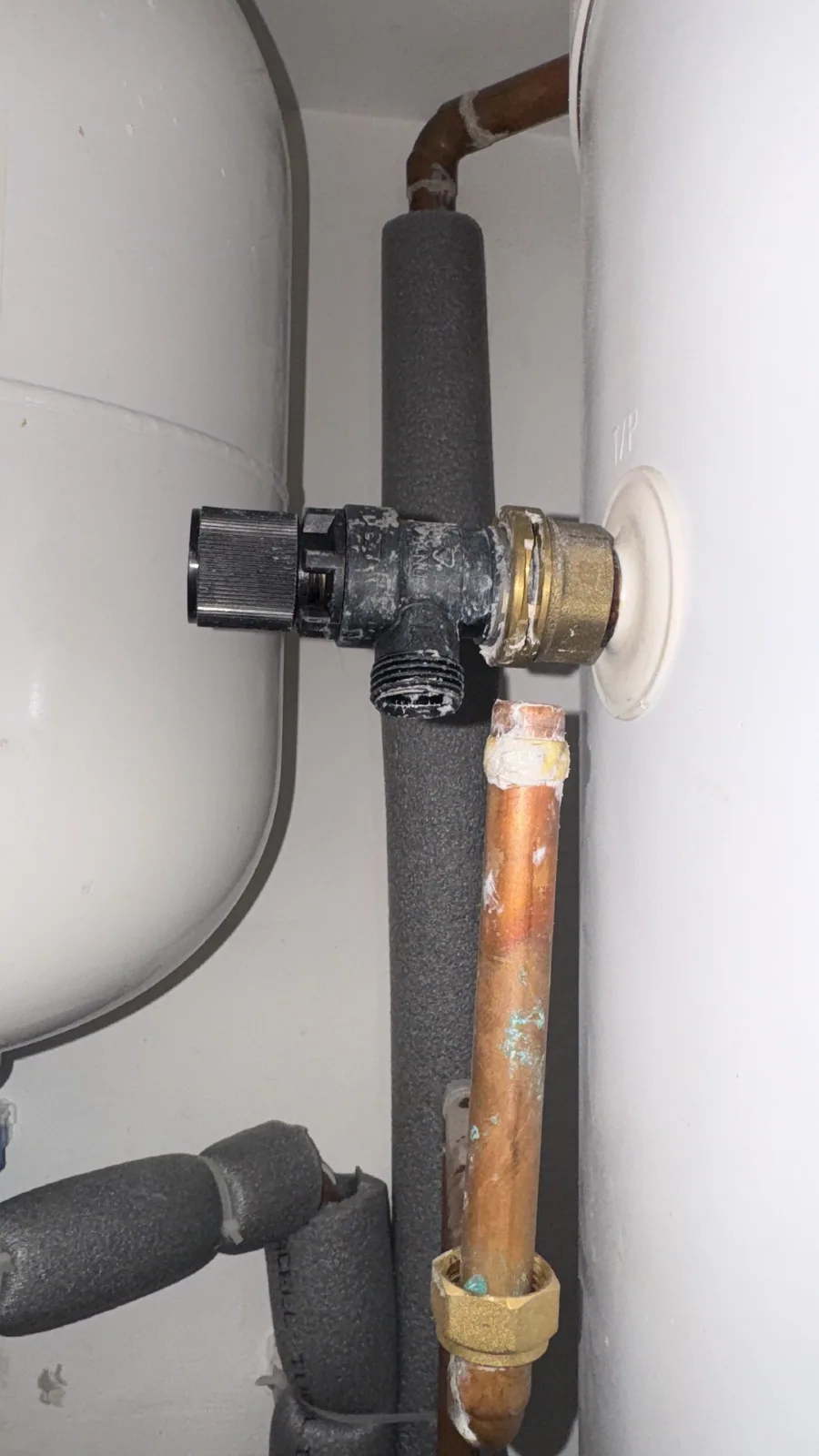
Point-of-use and small commercial water heaters
An under-sink or wall-mounted electric water heater may serve a particular sink or group of outlets independently of the main boiler. Tell us which outlets have lost hot water and provide the accessible model label. We assess the local heater, controls and connected supply rather than assuming the whole building heating system is at fault.
Heatrae Sadia, for example, separates its Multipoint unvented point-of-use products from other water-heating arrangements. The exact model matters for a repair or replacement, including the required controls, relief arrangements and connected fittings. We confirm repair scope, access and suitable replacement options after assessment. A small cabinet does not make electrical testing or work on a pressurised heater a household task.
Cylinder, immersion heater and control repairs
For stored hot water, we assess the cylinder arrangement, heating source and controls together. An indirect cylinder receives heat through a coil from a separate source; a direct electric cylinder relies on immersion heating. A cylinder can therefore stay cold while the radiators work normally, without the vessel itself needing replacement.
The investigation checks the relevant heat demand and supply, control operation and evidence of leakage or discharge. Immersion electrical testing and replacement require a competent professional, while unvented-cylinder safety work requires competence for that system. Do not remove covers, reset concealed cut-outs or bypass controls. We explain whether the required work is a component repair, a heating-source fault or a separate cylinder replacement.
Identify the scope before replacing equipment
A cold cylinder does not prove the cylinder vessel has failed. Equally, slow delivery of hot water is not always a boiler breakdown: the layout and length of pipe runs may be relevant. The assessment should separate a new fault from a longstanding performance limitation.
Once the cause is identified, we explain the repair, parts and charging basis. Model-specific components, electrical diagnosis, isolation or draining and restricted access can affect the total. We agree any further investigation before extending the work and distinguish restoration of the failed function from an optional capacity or control upgrade.
What to provide and how to prepare
Send your postcode, a description of the symptoms and any equipment details you can safely read. Let us know whether the property uses communal heating or an individual system. For communal supplies, report whether neighbouring homes or other parts of the building are affected and identify the managing agent.
Arrange safe access to the boiler, cylinder cupboard, controls and affected outlets. Tell us about locked plant rooms or restrictions on shutting down water. Commercial customers should describe operating hours and the impact on welfare facilities or service delivery, so the scope can account for the occupied premises.
- Is water absent, cold, lukewarm or unpredictably hot?
- Are all outlets affected, or just one tap or shower?
- Does central heating still operate?
- Did the problem begin after maintenance, a power interruption or a change of settings?
When the situation needs urgent attention
An active leak, water reaching electrical equipment, unusually hot discharge or steam changes the priority. Keep clear of the affected area and seek urgent assistance. Do not touch wet switches or attempt to stop discharge by plugging a pipe. Unvented cylinder safety devices must remain unobstructed and need competent assessment.
If you suspect a gas escape, a carbon monoxide alarm sounds or you suspect carbon monoxide, leave the property and call the National Gas Emergency Service on 0800 111 999 from outside in a safe place. Avoid flames and operating electrical switches. Seek urgent medical help for suspected exposure, and call 999 if anyone has severe symptoms. Do not wait for an online booking response.
Request a hot water fault assessment
Loyal Plumbers operates 24/7 with 10 active vans across London and inside the M25. Use the enquiry form and explain whether there is an immediate safety concern, complete loss of hot water or a planned performance improvement. Availability and the work required are confirmed from the circumstances.
For rented homes, include access and landlord authorisation arrangements. After assessment, retain the explanation of the fault and any operating advice or maintenance requirements. This helps the household use the restored system correctly and gives future visits a clear record if symptoms return.
Start with written details in the enquiry form. If photographs would help, the team can request them by email after your initial enquiry; the form does not accept image uploads. Only take photographs where access is safe.
Common questions
Can heating work when there is no hot water?
Yes. Combi hot water operation and cylinder heating arrangements can develop faults while radiator heating continues. The system type determines what needs checking.
Does an immersion heater repair require a new cylinder?
Not automatically. A faulty heater or control can be separate from the vessel. Its condition, accessibility and compatibility need assessment before work is proposed.
Can you work on a communal hot water system?
Explain the building arrangement and who manages the plant. Access, authority and the required technical scope must be confirmed; a problem affecting several homes may need coordination with the building operator.
Sources and further reading
Choose the work you need
Useful guides for this service
Explore all boilers, cylinders and hot water guides →Need help with this in London?
Emergency repairs, investigations and planned installations across London and inside the M25. Tell us what you need so we can agree the next step.
Discuss your job