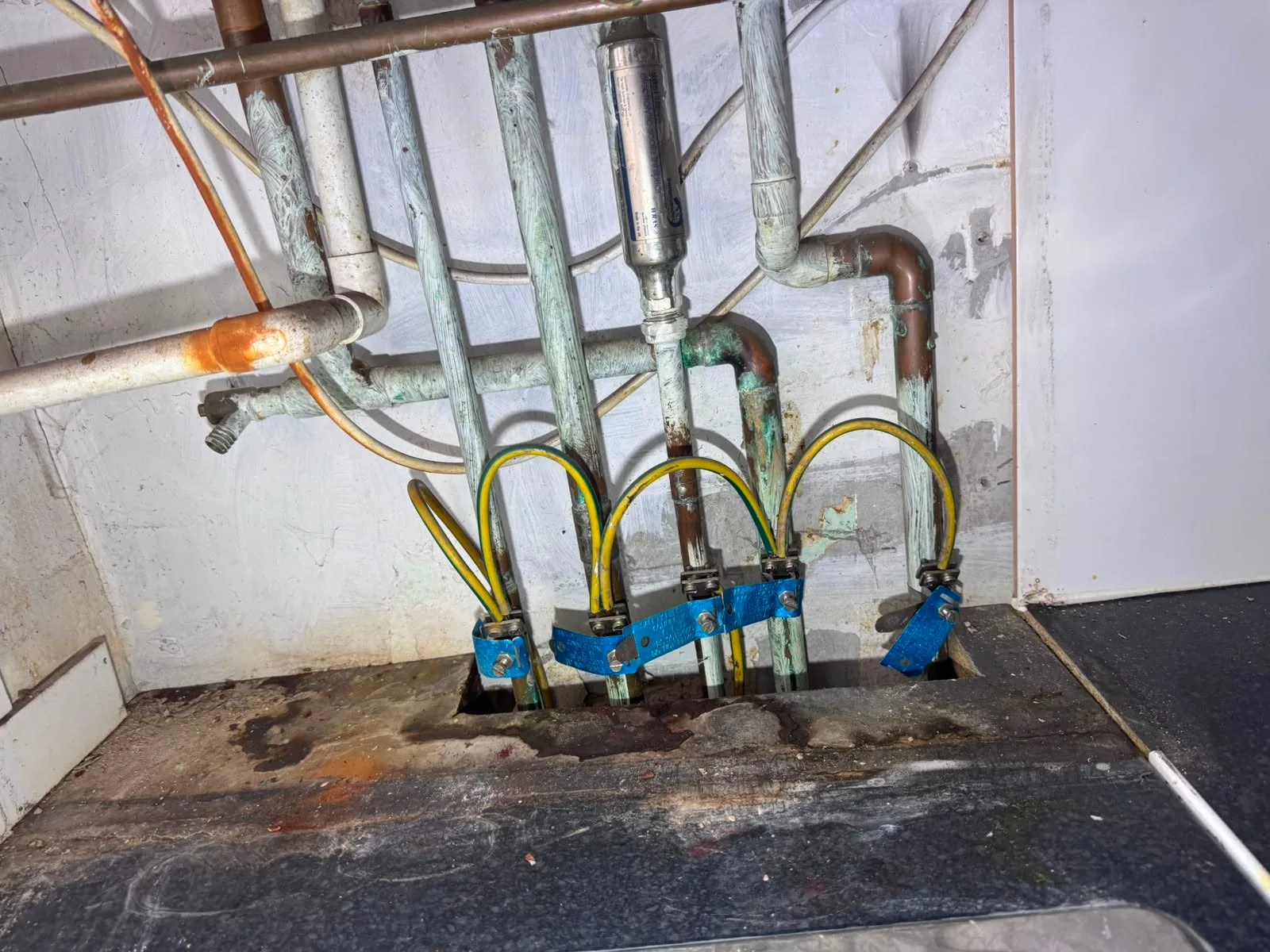
Locate the leak before opening the surface
We review the water-loss history and available pipe route, check accessible connections and use listening methods to investigate suitable concealed sections. The aim is to give the repair a defined starting point, supported by the pattern of findings rather than the position of a damp patch alone.
Acoustic testing helps distinguish sound associated with escaping water from other noise. Pipe material and installation conditions affect how it travels; Sewerin’s guidance explains differences between metal and plastic systems. We interpret the results with the other evidence and record any section where access or conditions limit the conclusion.
Supply pipes, heating circuits and hidden water loss
We investigate unexplained consumption, pressure loss and dampness associated with suspected concealed pipe leaks. Known meter observations, previous pressure tests and plans help identify the circuit to assess. We establish whether the loss is active and which accessible points can support useful testing.
If the source has not been established, we start with a broader leak investigation. Wastewater escaping during use, condensation and external water ingress need a different approach from a pressurised supply leak. We select the next test from the findings, so the visit stays focused on the cause and the repair.
Pipe material, background noise and access
Information about the pipe’s material, route and accessible fittings helps prepare an appropriate survey. Where those details are unknown, that uncertainty should be acknowledged. Mixed materials or a route with branches can make interpretation more involved than a simple straight section between known points.
Noise from building services, traffic or normal water use may affect what can be distinguished. Tell us about pumps, shared plant and working hours so useful test conditions can be discussed. Acoustic testing should not require occupants to improvise shutdowns of unfamiliar equipment; any necessary arrangements must be agreed with the responsible person.
A survey focused on the affected pipework
We agree the system and areas to investigate, review the fault history and arrange access to the relevant valves, cupboards or external surfaces. Existing meter or pressure observations are considered with their timing and conditions. For a managed property, we coordinate the required access with the keyholder or responsible person.
The visit records where testing was possible, the evidence obtained and the recommended next step. An inaccessible section or an intermittent leak may need another arrangement to complete the investigation. Those limits remain visible in the findings, alongside any location suitable for targeted repair access.
Combining findings before opening a floor or wall
A repair opening should follow the combined investigation, not one unexplained instrument response. Listening results may be considered alongside moisture patterns, accessible connection checks and other suitable tests. If the evidence is insufficient, we explain what remains uncertain and what additional step would provide useful information.
Even when testing narrows the area, opening may still be required to verify the pipe and repair the defect. Agree the proposed location, surface protection and making-good scope. Acoustic detection can support a more focused access decision, but it cannot promise that every finished surface will remain untouched.
Findings you can use to plan the repair
We explain the area investigated, the evidence supporting a suspected location and the access or further testing recommended. Where the findings support opening a floor or wall, we set out that work and the proposed repair stage. Repair and making-good costs are agreed against the access actually needed.
For a managing agent or insurance claim, tell us the reporting requirement before the visit so it can be included in the scope. The findings distinguish observations, limitations and recommendations. Your insurer or commissioning party decides whether the documents meet its requirements and whether costs are covered.
Request an acoustic survey assessment
Send your postcode, what evidence suggests water loss, the property type and any known pipe details. Mention photographs, plans or earlier reports so sharing by email can be arranged after the written enquiry. Do not expose buried pipes or operate unfamiliar valves just to obtain more information.
Loyal Plumbers covers London and inside the M25 with 10 active vans and a 24/7 service. We can arrange emergency attention for active water loss or a planned acoustic investigation for a stable concealed leak. Give us the symptoms and access details so we can prepare the right visit.
Common questions
Does acoustic detection work on plastic pipes?
Plastic pipe does not automatically rule it out, but material affects how sound is transmitted and the equipment and interpretation needed. Suitability must be assessed for the particular route.
Does a quiet test mean there is no leak?
No. A test may be limited by the leak behaviour, pipe arrangement, access or conditions. The result must be considered with the other evidence and any limitations stated.
Is the repair included in the survey?
Agree that separately. Investigation, opening up, repair and reinstatement may be different stages, especially where the location and access cannot be established in advance.
Sources and further reading
Useful guides for this service
Explore all emergencies and water leaks guides →Need help with this in London?
Emergency repairs, investigations and planned installations across London and inside the M25. Tell us what you need so we can agree the next step.
Discuss your job