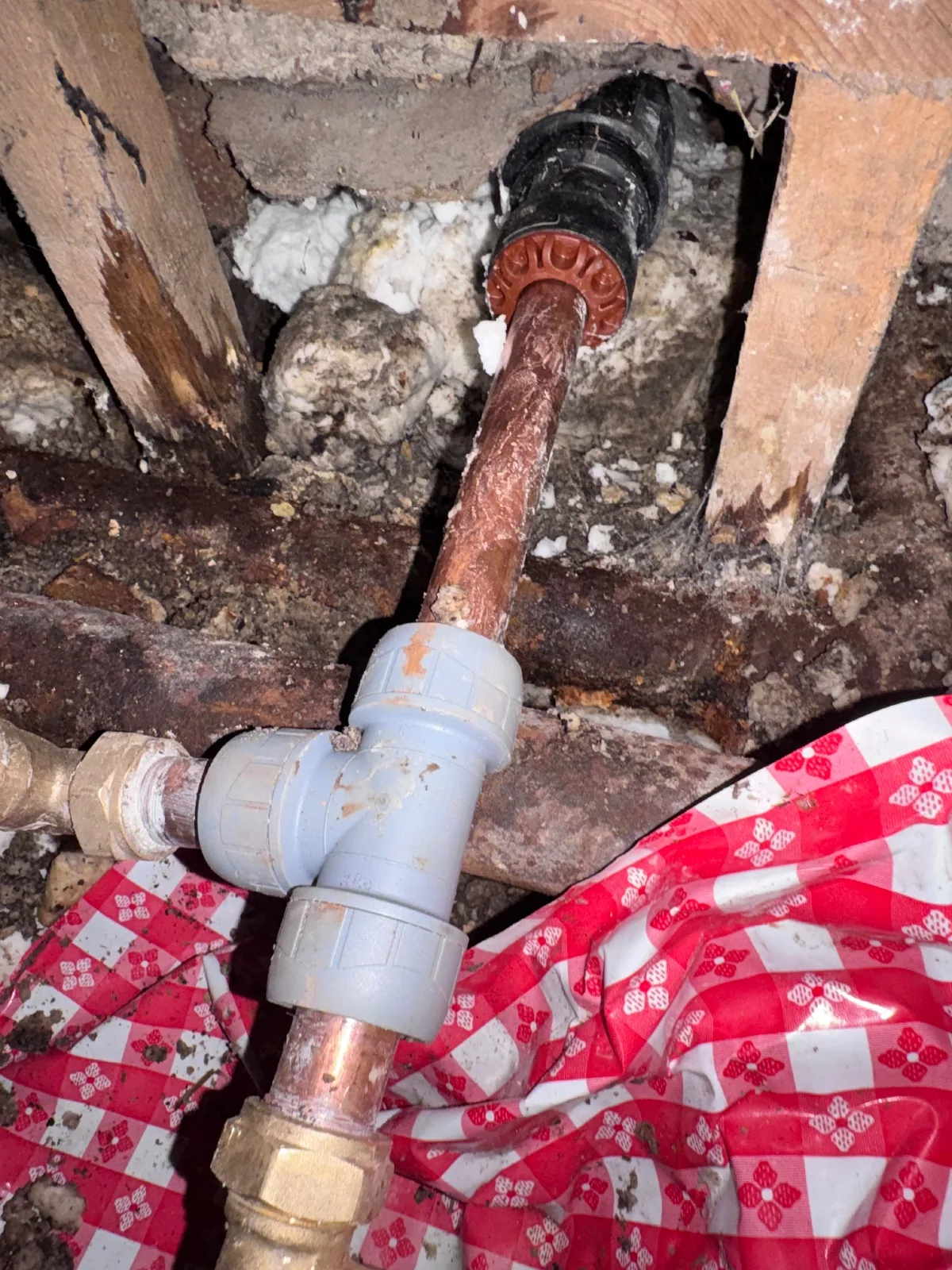
Split pipes, damaged connections and concealed bursts
We repair damaged water-supply and heating pipes following splits, failed joints, accidental drilling or other physical damage. First we identify the affected system and establish how to isolate it. A mains supply, stored-water connection and heating circuit can continue to release water in different ways; the nearest valve is not automatically the correct control.
Where the split is exposed, we assess the damaged section and surrounding material directly. Water appearing beneath a floor or through a ceiling needs tracing before opening a repair access point. We agree that access and distinguish immediate containment from permanent repair. If an initial temporary measure is needed, we explain what remains to complete and any restrictions on using the system.
Safe containment while the repair is arranged
Keep people away from water near electrics and unstable wet ceilings. If a familiar inside stop valve is safely accessible and turns normally, closing it may limit an incoming-water escape. Do not force it. Thames Water’s guidance explains how this control works; stored water and heating circuits may continue to leak after the mains is off.
Do not wrap a live damaged pipe and assume the result is reliable, or start cutting out the split before upstream isolation is established. Electrical Safety First advises against touching wet electrical equipment or a wet fuse box. Seek emergency assistance for immediate danger; a plumbing appointment should not delay that response.
Renewing the damaged pipe or fitting
Once the system is safely isolated, we assess the failed pipe and adjoining material, then replace the damaged section or renew the defective connection as agreed. The material and joining method must suit the existing system, its operating conditions and the surrounding pipe. A local failure does not automatically require replacement of an otherwise sound complete run.
Where corrosion, movement or damage extends beyond the visible split, we explain the evidence for a larger repair and the access it needs. We also consider support and protection at the repaired location. This avoids placing a new connection immediately beside visibly deteriorated material or leaving the same physical cause ready to damage the repair.
Accidental damage, freezing and repeated failure
Tell us whether the leak followed drilling, flooring work, an impact or a period of cold weather. That history affects the inspection. If the pipe was struck during building work, its route and protection need consideration before the area is closed again. Other nearby services may also need assessment by the relevant trade.
Where cold exposure is suspected, the repair discussion should consider the vulnerable location and appropriate protection afterwards. Do not use a naked flame or improvised electrical equipment to thaw a pipe. If repeated failures appear in the same area, ask whether movement, support or the condition of the whole run needs investigation rather than another identical local repair.
Floors, fitted units and managed-building access
An open cupboard connection and a pipe inside a tiled floor involve different access work. Tell us about floor coverings, fixed cabinets, stairs and any access panels. We agree the proposed opening and how the area will be left, including any finishing that is outside the plumbing repair.
In flats, a shared riser or supply may need managing-agent coordination and notice to other occupants. Commercial sites should identify a keyholder, isolation permissions and facilities affected by shutdown. Reliable authorisation matters before cutting into a pipe that may serve another unit. Provide drawings or previous repair notes if they exist.
Testing and restoring the service
After the repair, restoring water is a controlled part of the work. The new connections need checking and the affected system must be returned to its appropriate operating condition. For heating pipe repairs, this can involve more than simply reopening the incoming main. Ask what was tested and whether any further work remains.
Stopping the source does not establish that a wet floor, ceiling or electrical installation is ready for normal use. Drying and restoration may follow under a separate agreed scope. Keep the repair details and photographs where available; if insurance is involved, the insurer determines cover and documentation requirements.
Request a burst pipe repair
Use the enquiry form with your postcode, the pipe location and whether water is still escaping. Mention any safely taken photographs; we can arrange email sharing. Say whether the supply has been isolated, whether another flat is affected and who can authorise access.
Loyal Plumbers has 10 active vans and provides a 24/7 service throughout London and the M25. We confirm attendance for the actual circumstances. For a planned replacement of deteriorated pipework, describe the repair history so we can distinguish urgent stabilisation from a larger project.
Common questions
Will a patch be the permanent repair?
That depends on the method, pipe and condition. Any temporary measure should be described as temporary, with its limitations and the permanent work still required made clear.
Does every burst pipe need a whole new run?
No. Local replacement can be suitable where the surrounding material is sound. Widespread deterioration, repeated failure or inaccessible damaged sections can justify a wider proposal.
Can you restore the room afterwards?
Discuss drying, access reinstatement and the desired finish when agreeing the work. Plumbing repair, making good and final decoration are separate elements and must not be assumed to be included.
Sources and further reading
Useful guides for this service
Explore all emergencies and water leaks guides →Need help with this in London?
Emergency repairs, investigations and planned installations across London and inside the M25. Tell us what you need so we can agree the next step.
Discuss your job