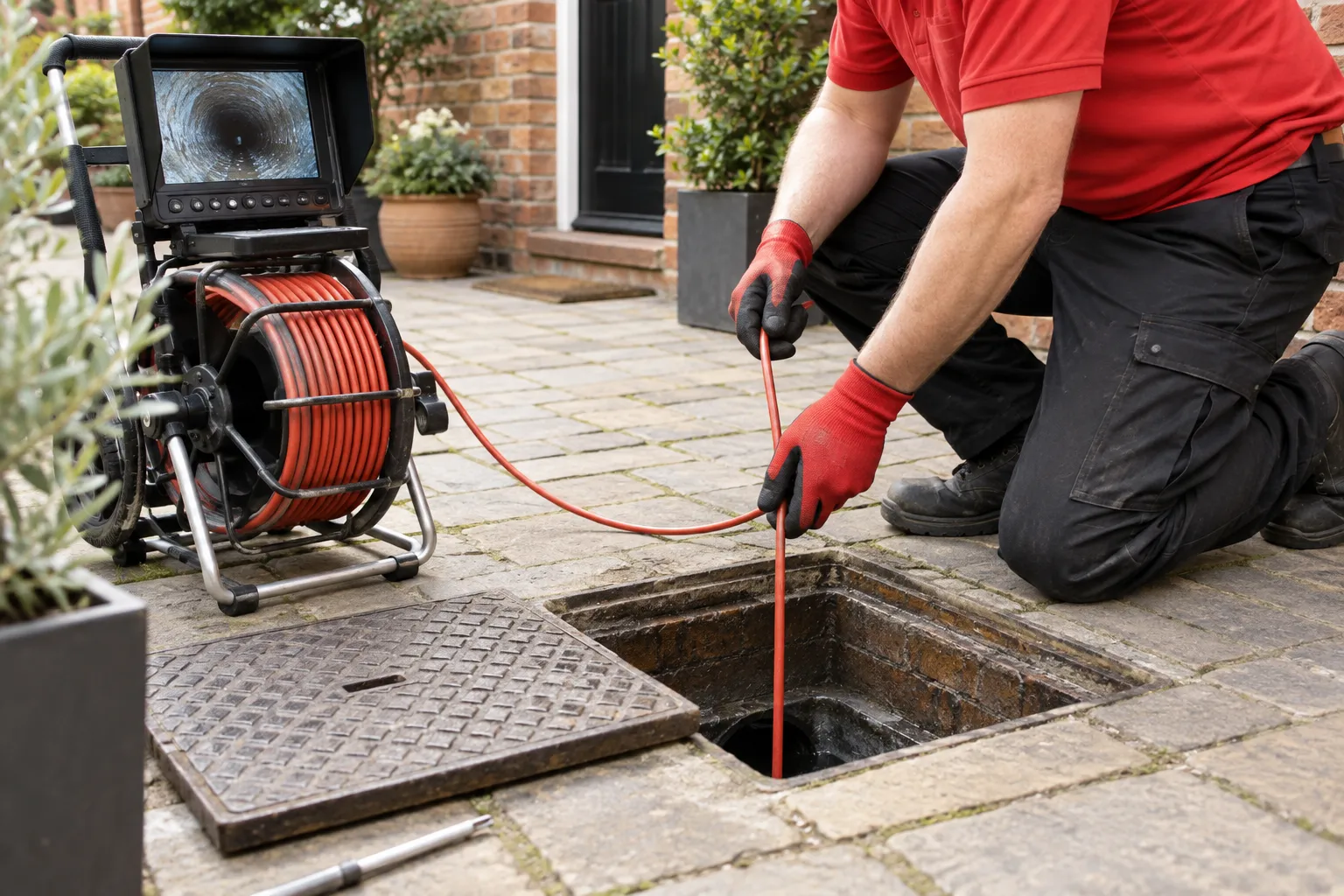
Repair the damaged section identified by the survey
We review the CCTV findings and connect the proposed repair to a specific location and defect. The assessment considers the drain’s condition, connections and available access. This establishes whether a local patch, a longer liner or another repair provides a workable solution.
Recurring blockage alone is not proof that a liner is needed. Deposits, foreign objects and unsuitable connections are assessed first, and any required clearance is identified. The proposal explains the defect being repaired, the extent of work and any separate issue that would remain outside that repair.
Local patches and longer drain lining repairs
A local patch targets a confined defect; a longer liner can address a suitable affected run. Cured-in-place lining installs and cures a liner within a prepared pipe. We specify the repair method for the surveyed condition rather than treating every no-dig product as interchangeable.
The agreed scope identifies the section, preparation and completion checks. We consider branch connections and access as part of that specification, with any associated work stated before installation. Where the condition prevents a sound lining repair, we explain the alternative access or replacement required.
When excavation or replacement may be more appropriate
A collapsed section, severe displacement or an inaccessible obstruction may prevent a liner being installed satisfactorily. A route with an inappropriate fall or geometry may need alteration rather than simply a new internal surface. Suitability depends on what is actually found, not on a preference to avoid lifting a driveway.
An excavation can sometimes provide the direct access needed to correct the problem. In other cases a local repair and lining of another section may be considered together. Ask for the reasoning and the condition of the areas left in place. No method should be sold as universally superior without addressing the specific defect.
Preparation, branches and site access
The drain must be assessable and appropriately prepared for the chosen repair. Where roots have entered, root cutting may be needed to clear the affected bore before further inspection or lining. Removing roots restores space but does not itself seal the entry point. The method must suit the pipe condition; any newly exposed damage is reviewed before the repair scope changes.
Connections serving other fittings or properties must be identified and accounted for. Ask how branch openings will remain functional or be reinstated as required by the method. Access chambers, equipment space and the route into the premises also matter. A no-dig description does not guarantee that every surface or access point remains untouched.
Plan service interruption and ownership permissions
Tell us which facilities use the drain and whether occupants or a business depend on it during the work. The repair may require a period when connected fixtures cannot be used. Agree the arrangements and the person who will communicate them, including any shared access or public-facing facilities.
Confirm ownership before authorising private repair. Thames Water explains that shared or public sewer sections may belong to the water company even where they pass through a property. In managed buildings, establish the landlord or agent’s authority for the affected run. Permission cannot be inferred simply because the access chamber is on your land.
Check the repaired section and record the work
We agree the completion checks and records as part of the repair proposal. These can include post-work camera footage and the installation information appropriate to the selected system. The purpose is to show the extent of the repair and the condition of the section after the work.
The handover identifies any remaining defects and the terms of any supplied product or workmanship cover. It distinguishes the repaired length from the wider drainage network. Keeping those records with the original survey helps a future investigation identify whether a new symptom concerns the same section or another part of the drain.
Request a relining assessment
Send your postcode, the symptoms and whether a CCTV report already exists. Mention its date and the area inspected; the team can arrange to receive the full report and footage by email. Include any proposed building work or surface restrictions that affect repair access.
Loyal Plumbers covers London and the M25 with 10 active vans and a 24/7 service. We can take a drainage problem from inspection and clearance through to an agreed lining or repair scope. An existing survey helps prepare the visit; further inspection is arranged where the evidence is incomplete.
Common questions
Does relining always avoid excavation?
No. Access creation, a collapsed section or another unsuitable condition may still require excavation. Agree the actual method and access works rather than relying on the phrase no-dig.
Can roots simply be lined over?
The condition and preparation requirements must be assessed. A liner should not be proposed over an unresolved obstruction without a suitable method and evidence that the result will work.
Is a new liner guaranteed for a set number of years?
The applicable product and workmanship terms are provided with the repair proposal. They identify the repaired section, installation conditions and exclusions; the agreed cover does not automatically extend to unrelated parts of the drainage network.
Sources and further reading
Useful guides for this service
Explore all drainage and blockages guides →Need help with this in London?
Emergency repairs, investigations and planned installations across London and inside the M25. Tell us what you need so we can agree the next step.
Discuss your job