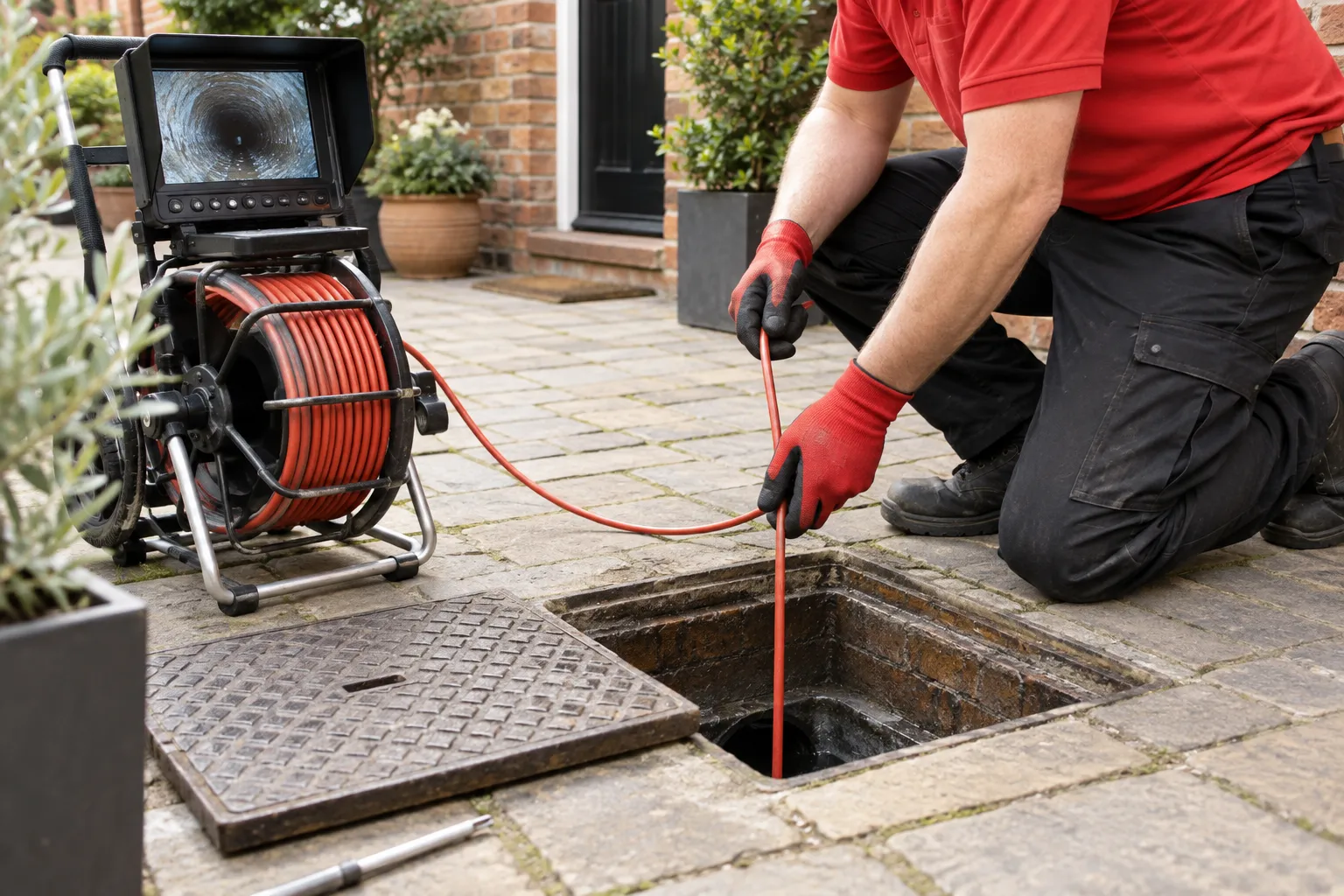
Find what is causing the drainage problem
We investigate drains that repeatedly block, suspected wastewater leaks and pipe runs whose condition is unknown. Before the inspection, we establish the affected fixtures, previous clearance work and the question the survey needs to resolve. That gives the findings a practical purpose: maintenance, repair or a property decision.
For purchases and managed properties, we define the runs to inspect and the information needed by the buyer, surveyor or agent. Location work and any specified reporting format are agreed with the inspection. A camera records the accessible internal condition; ownership and design approval remain separate questions.
Prepare the drain for a useful inspection
We assess the available entry points and working access before introducing the camera. Known chambers, locked areas and occupied spaces are included in the plan. Where a blockage prevents inspection, we discuss the clearance needed first and identify it separately in the work scope.
Preparation matters because standing water, deposits or obstructions can conceal defects. We record sections that cannot be viewed adequately and explain the next step needed to assess them. Leave heavy covers and chamber access to the attending team; there is no need to open them yourself before the visit.
What the camera can and cannot establish
CCTV can record visible internal features such as displaced connections, deposits, roots or damaged sections where access and visibility permit. Their significance depends on context: location, extent, flow conditions and the purpose of the survey. One striking photograph is not enough to define an entire repair programme.
The camera view alone cannot establish every condition outside the pipe, the soil around it or the cause of every building movement. Distinguish observed defects from interpretations and recommendations. Where further assessment is needed, the report should say why rather than suggest that CCTV answers every drainage question.
Footage, findings and a clear next step
The agreed survey deliverables identify the inspected runs, visible observations, relevant footage and recommended action. We record limitations so the report makes clear what was seen and what remains uninspected. This provides a useful basis for comparing repair proposals or discussing the condition with a property professional.
If your client or insurer requires a specific format or coded assessment, provide the requirement when booking. WRc’s sewer-condition guidance describes standardised reporting methods; a requested coded survey needs that reporting scope agreed in advance. We confirm the required deliverables before attendance.
From survey findings to drainage repairs
We relate each proposed repair to the observed location and condition. Clearance, local repair, relining and replacement address different problems. Our drainage service can take the findings forward into an agreed work scope, including preparation, access and reinstatement where needed.
A suitable liner can address some damaged sections, while collapse or an unsuitable route may require excavation or alteration. An operational blockage may need clearance and maintenance instead of structural work. Where visibility is incomplete, we resolve the remaining inspection requirement before treating the survey as a whole-system assessment.
Purchases, shared drains and managed premises
For a property purchase, tell us the timing, access permission and any specific concern from the building survey. Agree which runs can be inspected within the site access available. Drain ownership, legal easements and responsibility for a shared sewer are separate questions for the appropriate parties; camera footage does not settle them.
Thames Water’s guidance identifies shared and public sewer responsibilities. In blocks or business premises, confirm whether the proposed survey is of private branches or a shared route and who can authorise it. Site shutdowns, access to occupied areas and working around public facilities should be planned before equipment is brought to the address.
Request a London drain survey
Use the enquiry form with your postcode, the reason for the survey and details of any recurring problem. Mention existing plans, previous footage and known access points. The team can arrange email sharing of documents after the initial enquiry; there is no need to disturb a cover to obtain photographs.
Loyal Plumbers operates 24/7 across London and the M25 with 10 active vans. Survey appointments depend on the scope and site access. An overflowing drain may first need a clearance response; a survey then addresses the underlying question once useful inspection conditions can be established.
Common questions
Is unblocking included in a CCTV survey?
Only if agreed. Clearance may be necessary for visibility or camera passage, but it is a distinct task. Ask how additional preparation and an incomplete inspection would be handled.
Can a survey prove that a drain will never block again?
No. It records the accessible condition at the time and any limitations. Future use, deterioration and unseen sections prevent that kind of guarantee.
Can I use the report to compare repair quotations?
Yes, if it clearly identifies observations and locations. Share the complete report and ask each proposal to explain how it addresses the same findings, including access and reinstatement.
Sources and further reading
Useful guides for this service
Explore all drainage and blockages guides →Need help with this in London?
Emergency repairs, investigations and planned installations across London and inside the M25. Tell us what you need so we can agree the next step.
Discuss your job