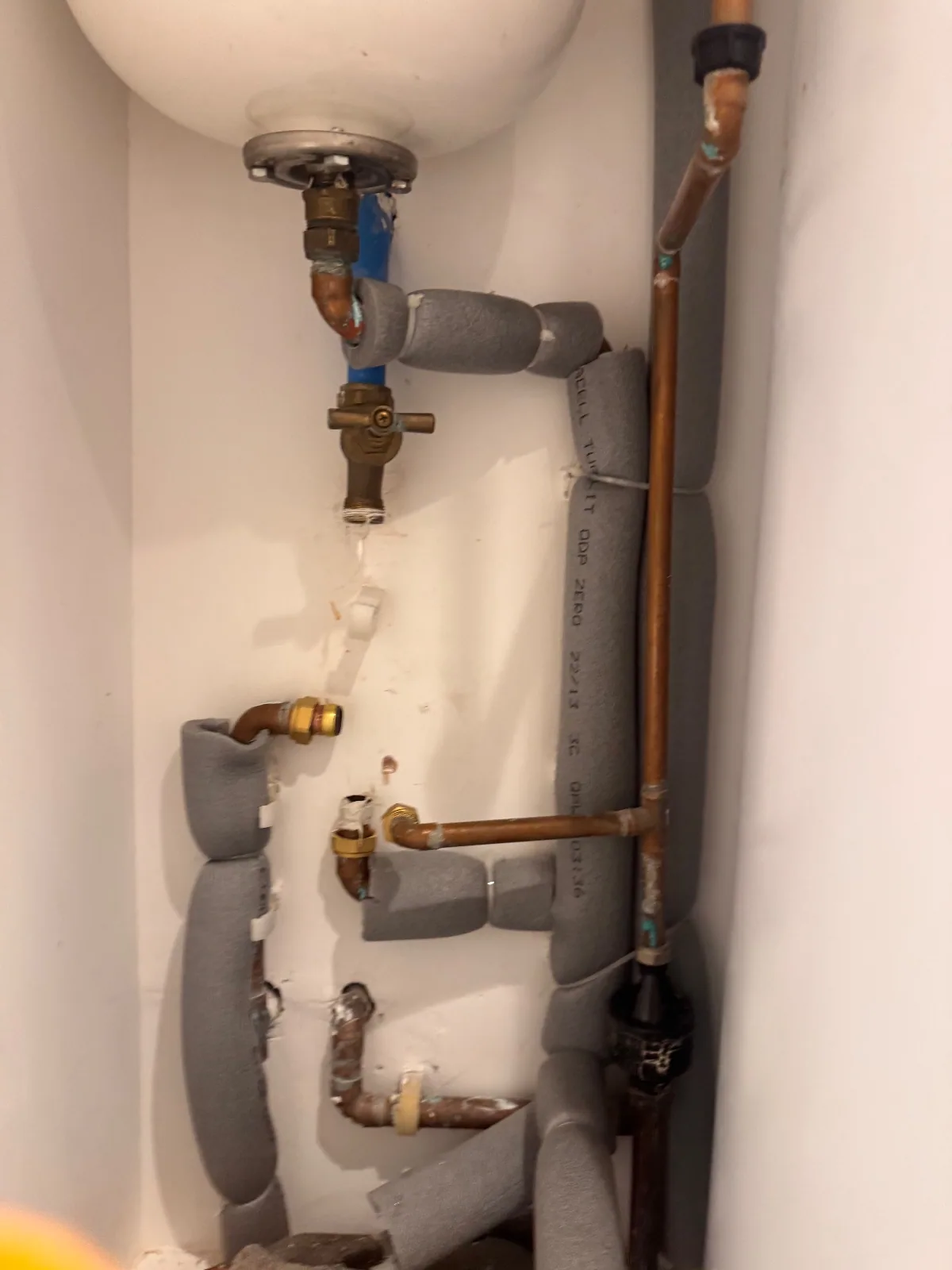
Specify the hot water system for your property
We build the installation around the outlets you use and the demand they create. A second bathroom, consecutive showers or a change in occupancy can require a different capacity and recovery arrangement. The survey records simultaneous use and the existing heat source before the cylinder is selected.
For a refurbishment, we coordinate the cylinder proposal with the new bathroom or kitchen layout. For a conversion from vented storage, we assess the changes needed across the supply and distribution. Where better shower performance is the goal, we check the incoming supply rather than assuming a pressurised cylinder alone will deliver it.
Check supply performance and pipework
We assess available flow and pressure, the incoming pipework and the proposed connections under conditions relevant to the property. Existing restrictions or a shared supply are considered alongside the intended outlet demand. The findings establish what the installation can support and what supply work is needed.
In flats and managed buildings, we identify access to communal supplies and any approval needed for alterations. Necessary pipework changes are included in the project scope. This allows the cylinder, connections and surrounding work to be planned together before equipment is delivered.
Choose the heating arrangement before ordering
An indirect cylinder receives heat from another source through a coil or other specified heat-exchange arrangement; a direct cylinder uses immersion heating. The appropriate selection depends on the current heat source and any planned changes. An ordinary combi installation does not automatically need a cylinder added to it.
If a future heat pump or solar installation is part of the brief, state that now. We check cylinder-side compatibility for the proposed model and identify what is included today and what requires a separately designed future stage. A spare connection alone does not establish compatibility with another heat source.
Plan the location and discharge route together
The cylinder location has to work for maintenance, connections and a compliant discharge arrangement, as well as floor area. A convenient cupboard may be unsuitable if the required route cannot be achieved. A different position can alter hot water pipe runs and the amount of building work.
We plan the cylinder’s pressure and temperature protection and discharge provision as part of the installation, using the selected model’s requirements and the hot-water safety framework in Approved Document G for England. The proposal identifies the applicable building-control route, required access and handover documentation before equipment is ordered.
Understand conversion work beyond the cylinder
For a vented-to-unvented conversion, we identify supply and distribution changes, controls and redundant storage connections. The proposal records what stays, what is removed and how remaining services are maintained. We assess the complete conversion; closing the vent on an existing cylinder does not create a safe unvented installation.
Where the project accompanies a bathroom refurbishment, we coordinate the cylinder connections and discharge route before finishes close off access. Electrical work, openings and reinstatement have defined responsibilities in the scope. Supply upgrades, relocation and difficult removal routes are identified separately because they can materially change the installation cost and programme.
A defined installation proposal
Following the survey, we set out the cylinder model and capacity, controls, supply alterations, discharge provision and commissioning. The proposal identifies electrical work, removal of redundant equipment and the agreed access and making good. Any dependency on another trade or building permission is stated so the programme can be coordinated.
- Household or premises demand and simultaneous outlet use.
- Existing supply, heat source and proposed cylinder location.
- Access dimensions and room for ongoing maintenance.
- Necessary permissions, isolation arrangements and working hours.
- Documentation, product terms and ongoing service requirements.
Installation, commissioning and handover
The work is planned with the appropriate unvented competence and applicable building-control arrangements. Electrical connections and any gas work are identified separately so each task has the right responsibility. G3 competence concerns the unvented installation; gas registration is not a substitute for it.
We commission the agreed installation and provide the applicable handover records and an explanation of ordinary controls. The handover covers maintenance requirements and what to do if discharge appears. Safety valves and thermal controls remain for competent professional attention, and access is retained for future servicing.
Request an installation survey
Loyal Plumbers operates with 10 active vans and 24/7 coverage across London and inside the M25. For a planned installation, send the postcode, current system, proposed use and any drawings or access constraints you can describe. We establish the survey and project scope before an installation commitment.
Describe the current system, intended outlets and any access constraints in your enquiry. Mention plans or photographs and the team can arrange email sharing. We use that information to prepare a property survey and a practical installation proposal.
Common questions
Is an installation different from a replacement?
Yes. A new installation or conversion needs the surrounding system designed and connected. A replacement starts with existing storage, although that installation must still be checked.
Can an unvented cylinder go in any cupboard?
Not automatically. Access, support, supply connections, maintenance clearance and a suitable discharge route all need assessment.
Will it guarantee two powerful showers?
No universal guarantee follows from the cylinder type. The available supply, outlets, pipework and selected storage and recovery capacity must support the required demand.
Sources and further reading
Useful guides for this service
Explore all boilers, cylinders and hot water guides →Need help with this in London?
Emergency repairs, investigations and planned installations across London and inside the M25. Tell us what you need so we can agree the next step.
Discuss your job